

In recent years, weighted blankets have become increasingly popular as a therapeutic tool for children, particularly those with sensory processing disorders, anxiety disorders, or autism. These blankets are often filled with materials such as glass beads or plastic pellets and provide gentle pressure, creating a calming, hug-like effect. However, there are several important factors to consider before using a weighted blanket on your child.
Learn about weighted blankets
Weighted blankets are heavier than standard blankets, typically weighing 5 to 30 pounds (about 2.5 to 14 kg). The weight of a weighted blanket is evenly distributed across the blanket, helping to provide deep touch pressure (DPT). This pressure can stimulate the production of serotonin, a neurotransmitter that helps create a feeling of well-being, and melatonin, which helps regulate sleep. For many children, this can improve sleep quality and reduce anxiety levels.
Choose the right weight
When choosing a weighted blanket for your child, it’s important to choose the right weight. It’s generally recommended to choose a weighted blanket that’s about 10% of your child’s body weight. For example, if your child weighs 50 pounds, a 5-pound weighted blanket would be ideal. However, it’s important to consider your child’s comfort and preferences, as some children may prefer a slightly lighter or heavier weighted blanket. If you’re unsure about the right weight for your child, be sure to consult your pediatrician or occupational therapist.
Security question
Safety is of utmost importance when using a weighted blanket with your child. It is important to ensure that the blanket is not too heavy, as this may pose a suffocation risk or restrict movement. Weighted blankets are generally recommended for children over the age of two, as younger children may not be able to remove the blanket if they become uncomfortable. Additionally, it is important to supervise your child when using a weighted blanket, especially at sleep time.
Material issues
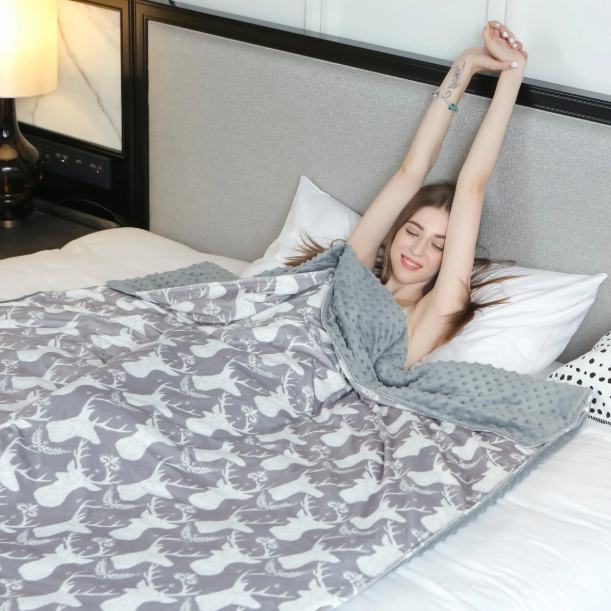
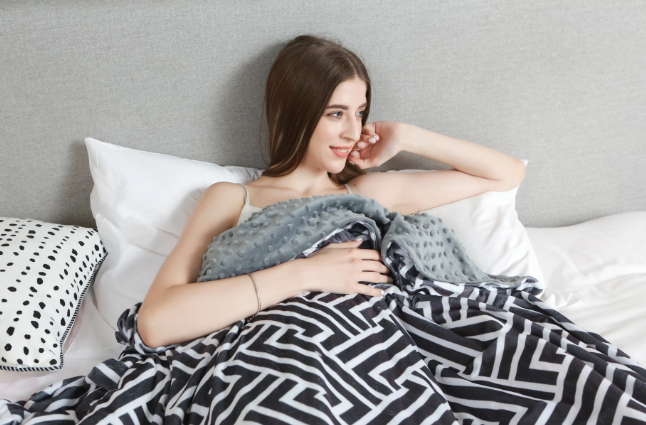
Weighted blankets come in a variety of materials. Some blankets are made from breathable fabrics, while others are made from thicker, less breathable fabrics. For children who tend to overheat while sleeping, a breathable, moisture-wicking weighted blanket is recommended. Also consider how easy it is to clean the weighted blanket; many weighted blankets come with removable, machine-washable covers, which is a big plus for parents.
Potential benefits
The benefits of weighted blankets for children are clear. Many parents report that their children experience better sleep, less anxiety, and a calmer mood after using a weighted blanket. For children with sensory processing disorders, the deep touch pressure can help them feel more grounded and secure. However, it is important to remember that every child is different, and what works for one child may not work for another.
In summary
Weighted blankets are an effective tool for helping children manage anxiety, improve sleep, and provide comfort. However, it is critical to use weighted blankets with caution. By considering the right weight, ensuring safety, choosing the right material, and understanding its potential benefits, parents can make an informed decision to incorporate a weighted blanket into their child’s daily routine. As always, consulting a healthcare professional can provide additional guidance specific to your child’s needs.
Post time: Jun-23-2025